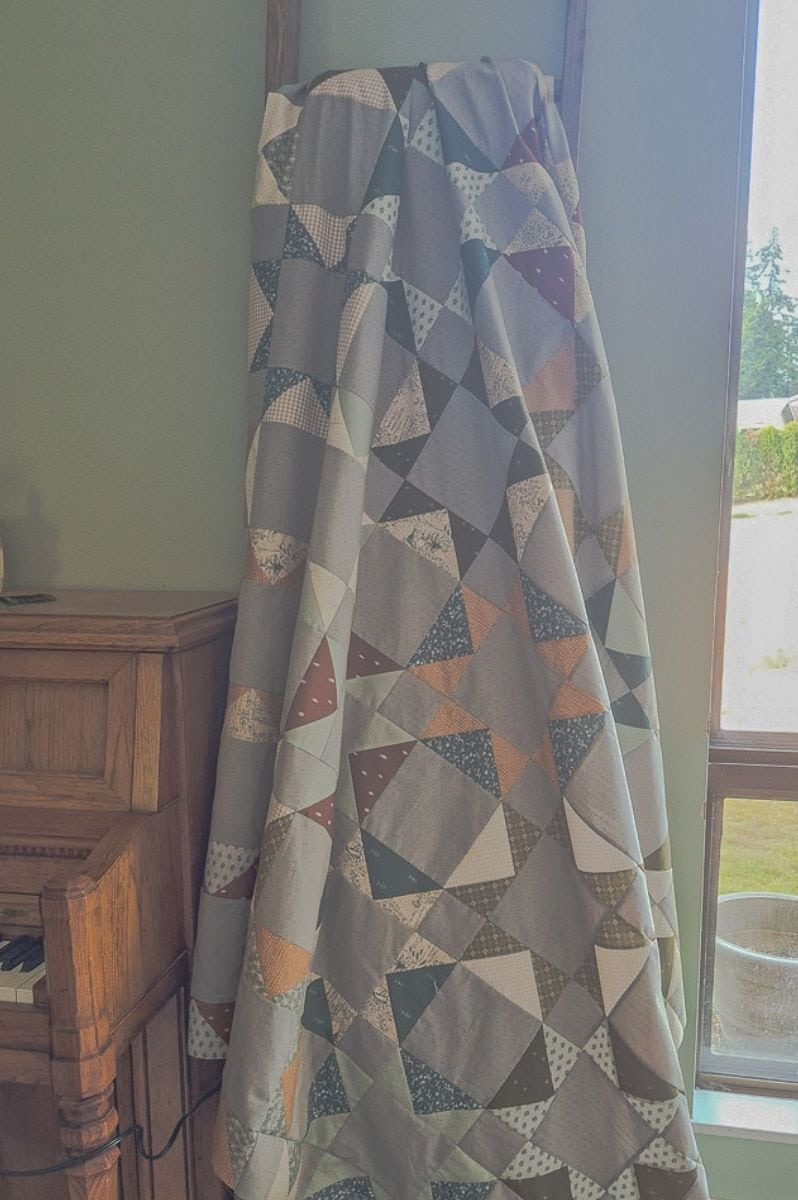
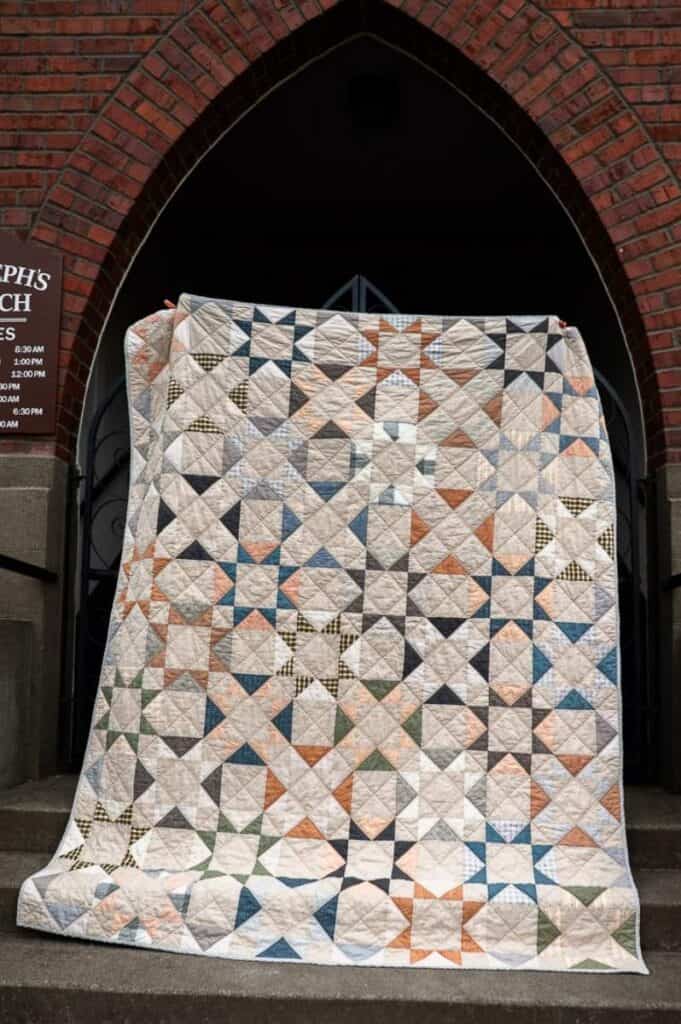
The Benedict Quilt – a perfectly scrappy flying geese quilt
The Benedict quilt is perfect for letting creativity guide your quilt, especially if you’re sewing during moments in a day or weekend nap times. Summer and Fall are busy seasons in my house, and a cut-arrange-sew approach to row quilts is great for sewing in the margins of my day. I love nostalgic and vintage quilts these days. The rustic charm of a well loved quilt warms my heart — think of the memories the stitches of the quilts from bygone days could tell.
Sewing with scraps helps the quilt have that vintage-y vibe that looks as comforting as it feels. Do you have random 3” x 6” flying geese left over from other quilts? This is the quilt to use them. Not all heirloom quilts have to be intricately piece or perfectly color coordinated. The simplicity of a three block quilt gives freedom for the fabric to charm the eye of the beholder without feeling overwhelmed by the busyness of a complicated quilt block.
Quilt Stats
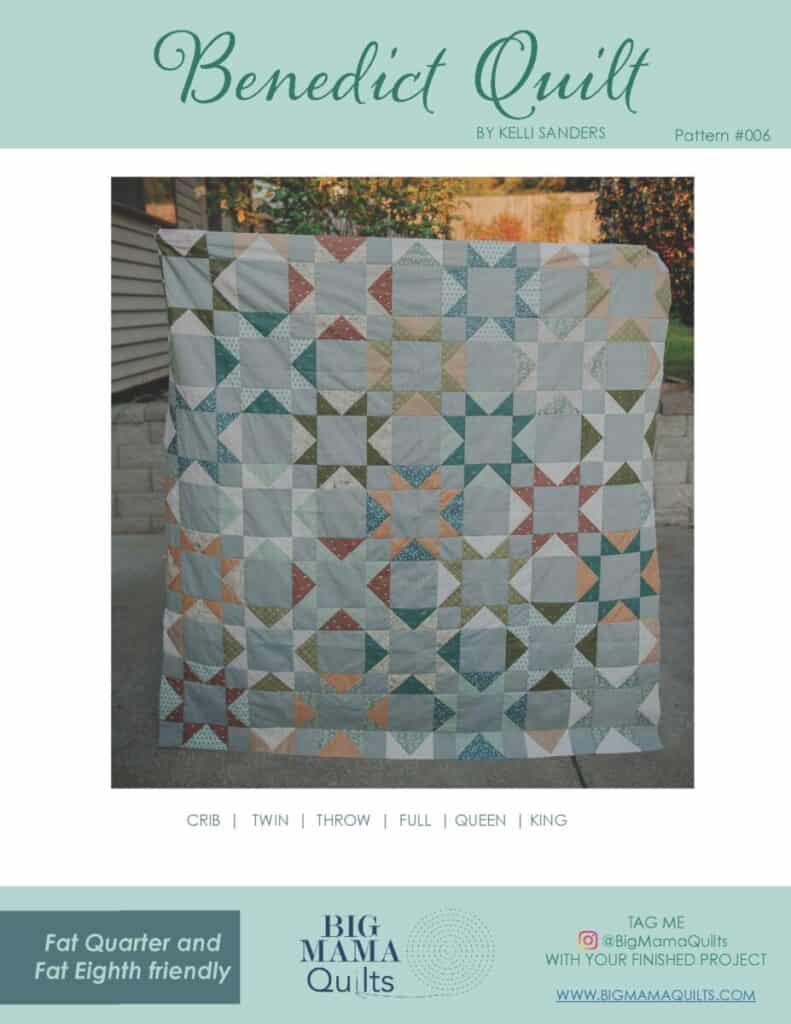
A classic row quilt, the Benedict quilt’s flying geese alternate with 3” and 6” squares allowing it to come together with intention row by row.
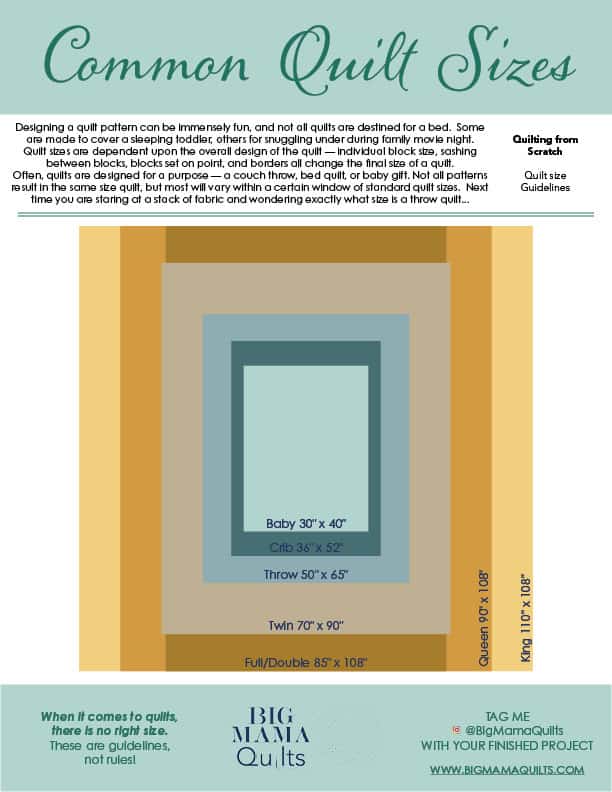
The Benedict Quilt is a classic timeless design perfect for a baby’s crib, curling up on the couch with, or covering a bed. The baby crib quilt, small enough to throw on the floor for playtime or lay in a crib, finishes at 39” x 57”. The throw quilt, perfectly sized to curl up under during movie night or spread out on the grass for an afternoon picnic, finishes at 66” x 66”. Finally, the pattern includes all bed sizes, from twin to king.
Perfect for Using Scraps
Every year I desire a scrappy quilt over a cohesive two color quilt, unless those two colors are timeless. The Benedict Quilt is just as stunning in modern peach and off-whites or classic Americana indigo and white as it is scrappy. Scraps of fabric, not perfectly coordinated, leaning warm and cool add a vintage vibe.
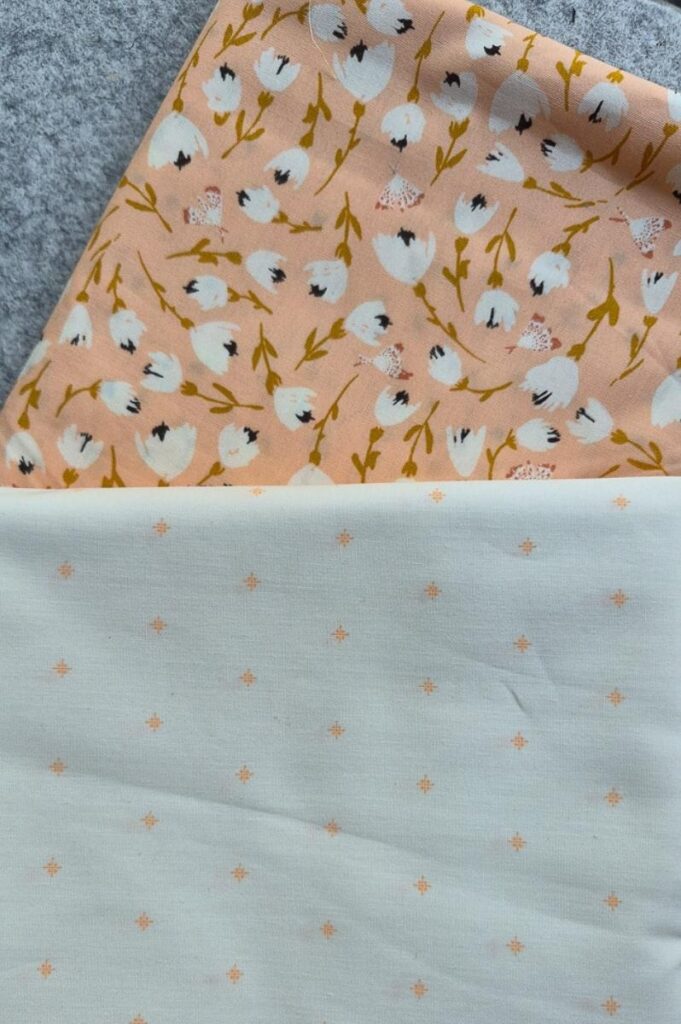
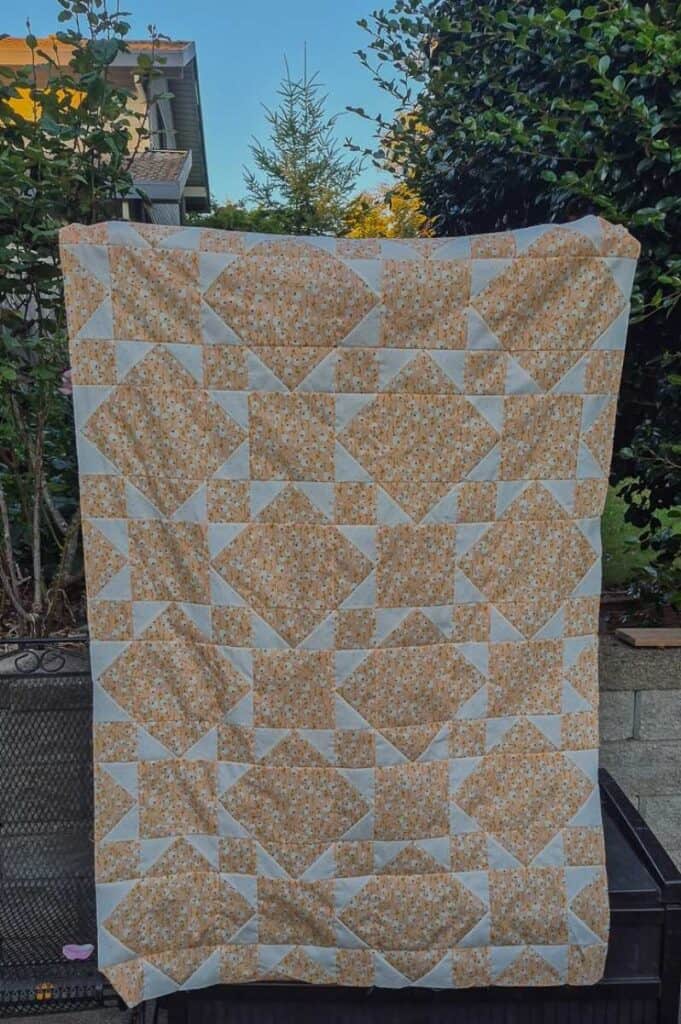
Do you love scrappy quilts but scared they won’t look good?
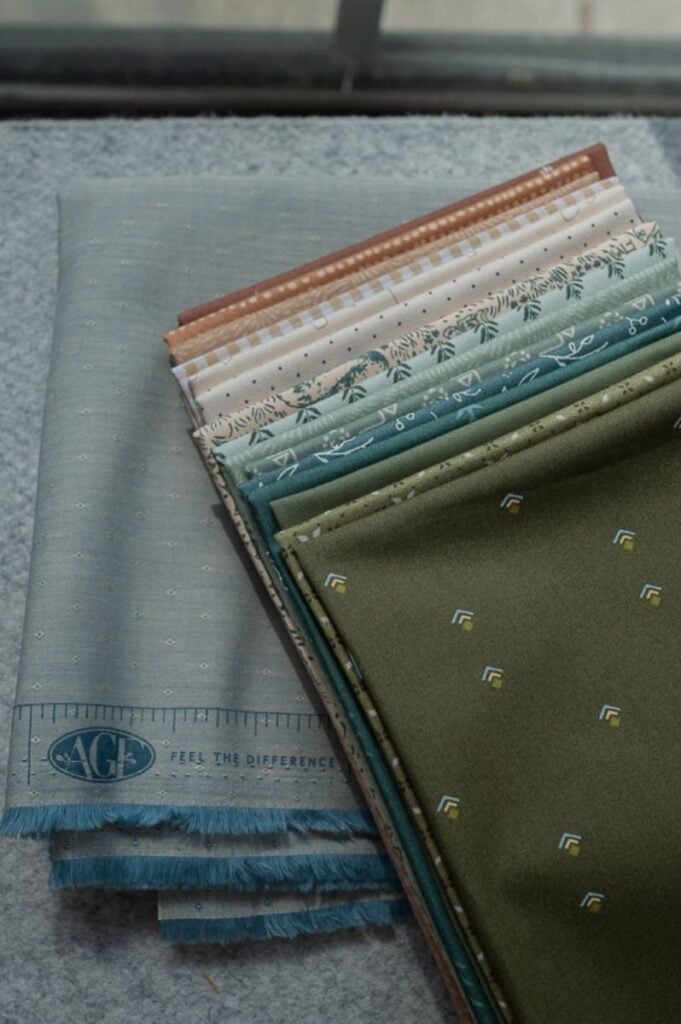
The key to a cohesive scrappy look in the Benedict quilt is to use the same background fabric. A unifying background — a cream, a washed out blue, a low-volume print — turns a chaotic collection of wild geese into a cohesive quilt.
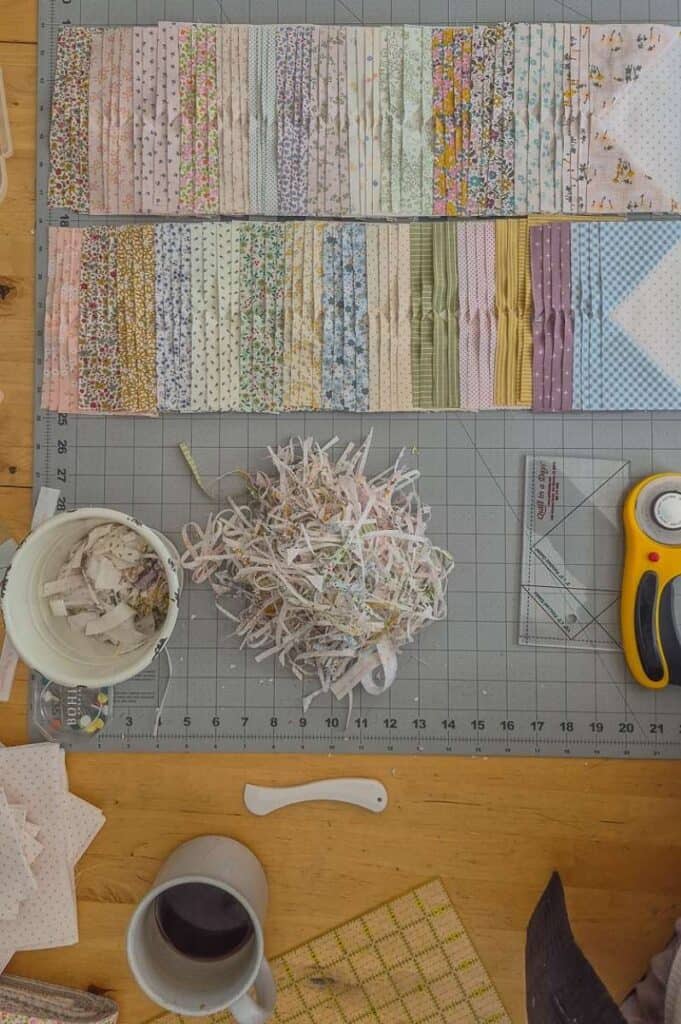
Do you have a breathtakingly curated fat quarter bundle you have no idea what to do with? Or a sweet low volume or tiny floral fat eighth bundle? When choosing fabrics for flying geese, it’s important the goose contrasts from the sky, so your geese stand out.
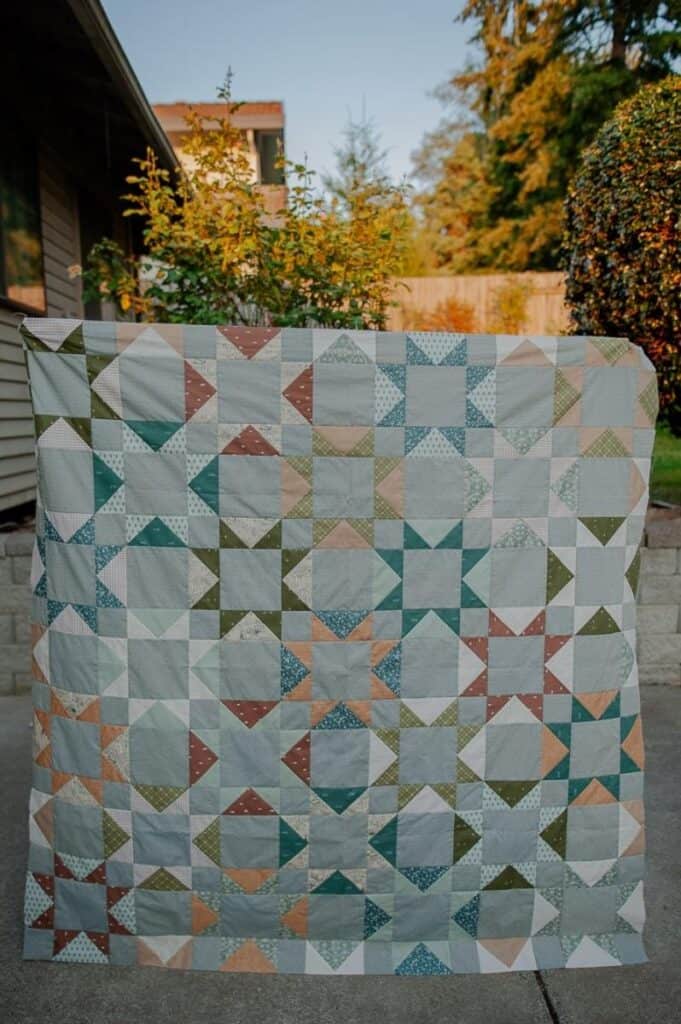
Use the same fabric for the background and the geese results in stars aligning together like an irish chain.
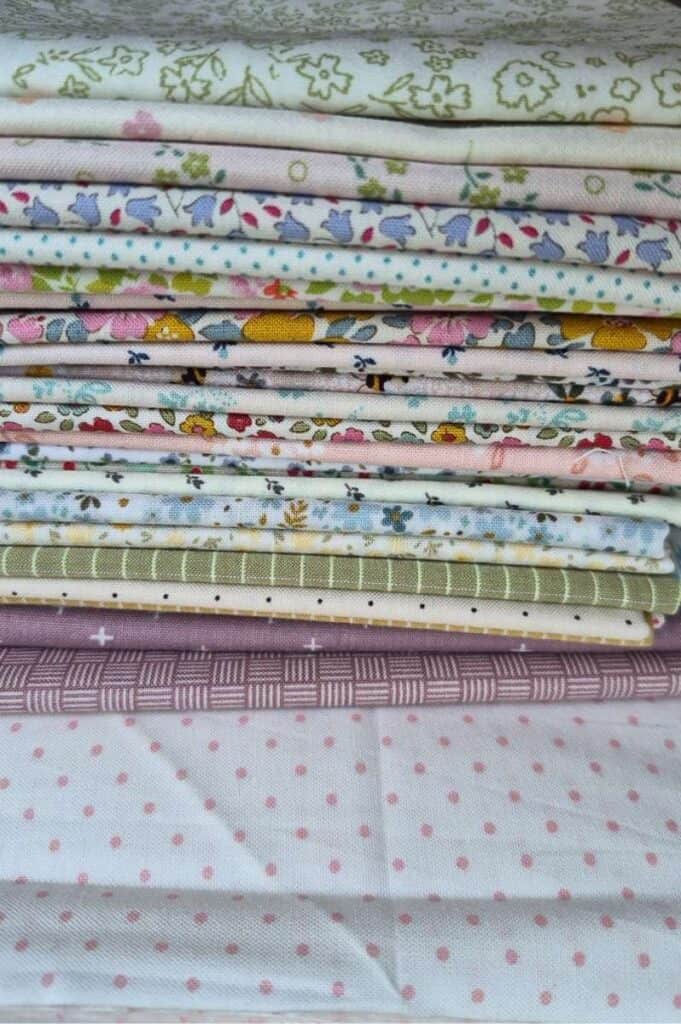
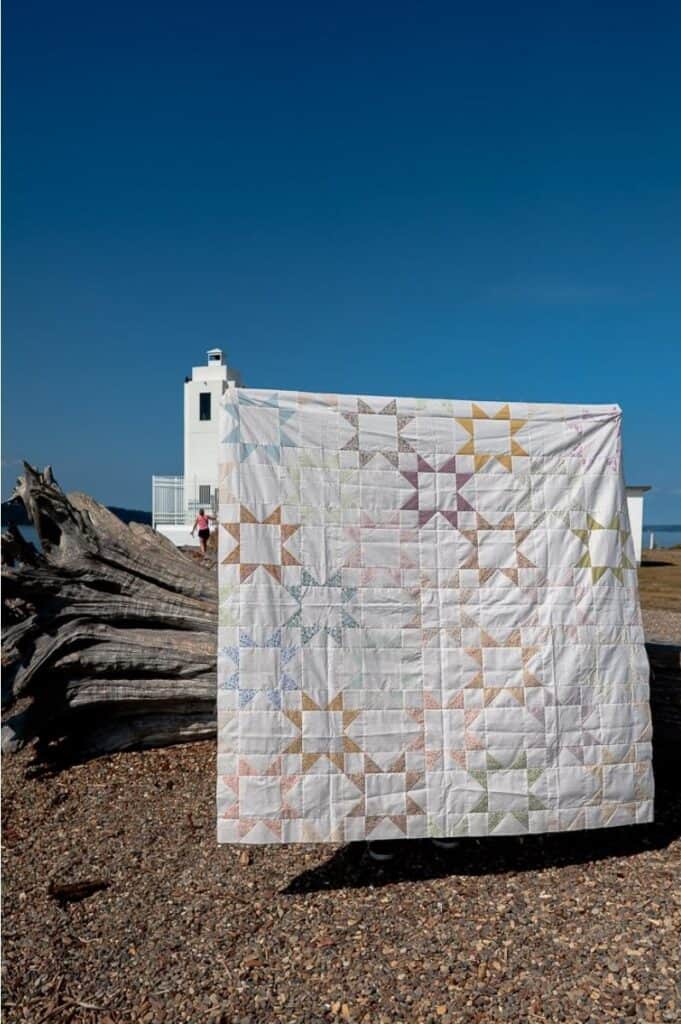
Use contrasting fabric for the geese and sky with a neutral background gives a quilt with that cozy scrappy vintage vibe.
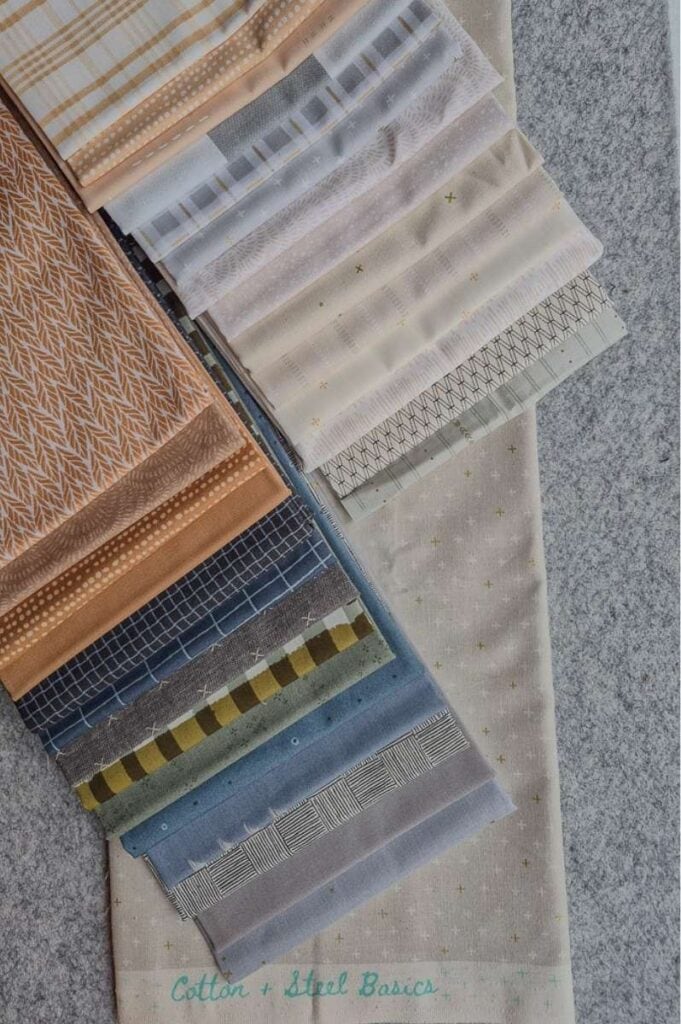
Quilting’s most iconic and versatile block: the Flying Geese block
The geometry of the flying geese block mixed with the artistry of a carefully culled stack of fabric results in a stunning scrappy quilt. The triangle inside a rectangle results in a visual direction, a transition, and an interesting place for the eye to land. When the triangles stack upon one another, they give the illusion of geese flying in formation.
Flying Geese blocks, constructed through several methods, are a great way to refine your piecing skills and build confidence. The four-at-a-time flying geese method allows for the geese and sky to have endless color combinations giving the flying geese a wild scrappy look.
Flying Geese Tips
Sewing flying geese together should result with a perfectly sharp point in the middle of the block, but sometimes that center point gets lost in the seam allowance. The key to keeping that sharp point is trimming the flying geese block correctly. The Benedict quilt utilizes the 4-at-a-time method of constructing oversized flying geese blocks. Making the blocks oversized allows for trimming so your goose isn’t tragically beakless.
No waste flying geese are not no trim flying geese. Traditional stitch and flip flying geese are not no trim flying geese. Oversized 4-at-a-time flying geese also require trimming. No matter the method you choose to make your flying geese, you must trim them.
Flying Geese ruler helps to trim them accurately. Any ruler with washi tape or Hugo’s Amazing Tape will do also. Place the tape along the 45-degree line to give the folds of the fabric a place to line up.
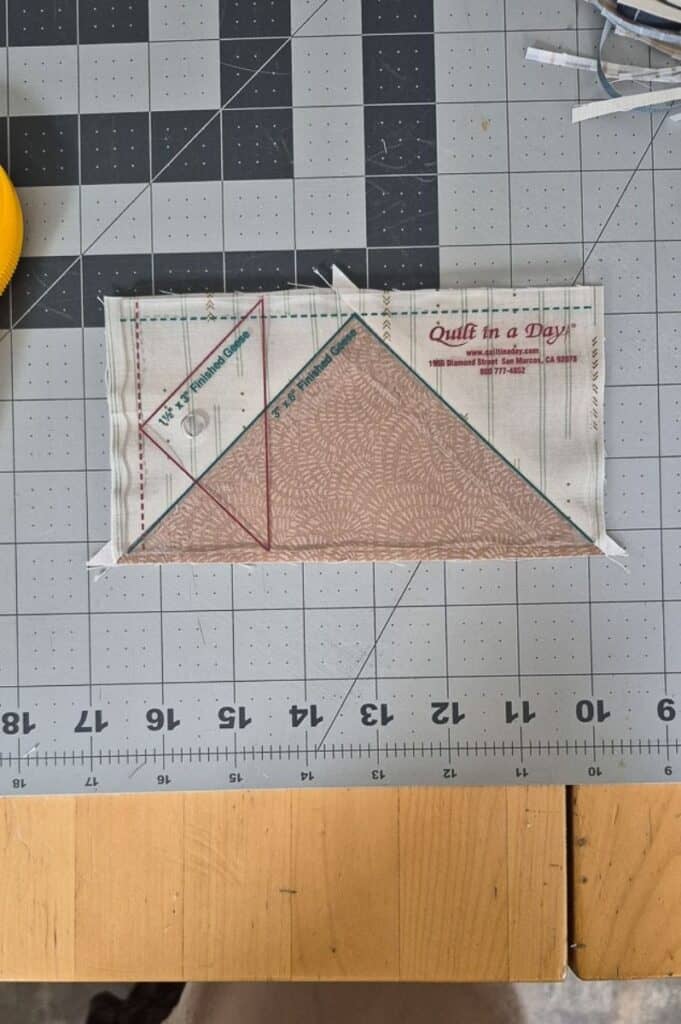
Blocks in any quilt will fit together better when they are all the same size. Trimming is the key to make all the blocks the same size.
Sew into Rows
The Benedict quilt is constructed by alternating a flying geese block with a 3” or 6” block depending on the row. The quilt comes together row by row.
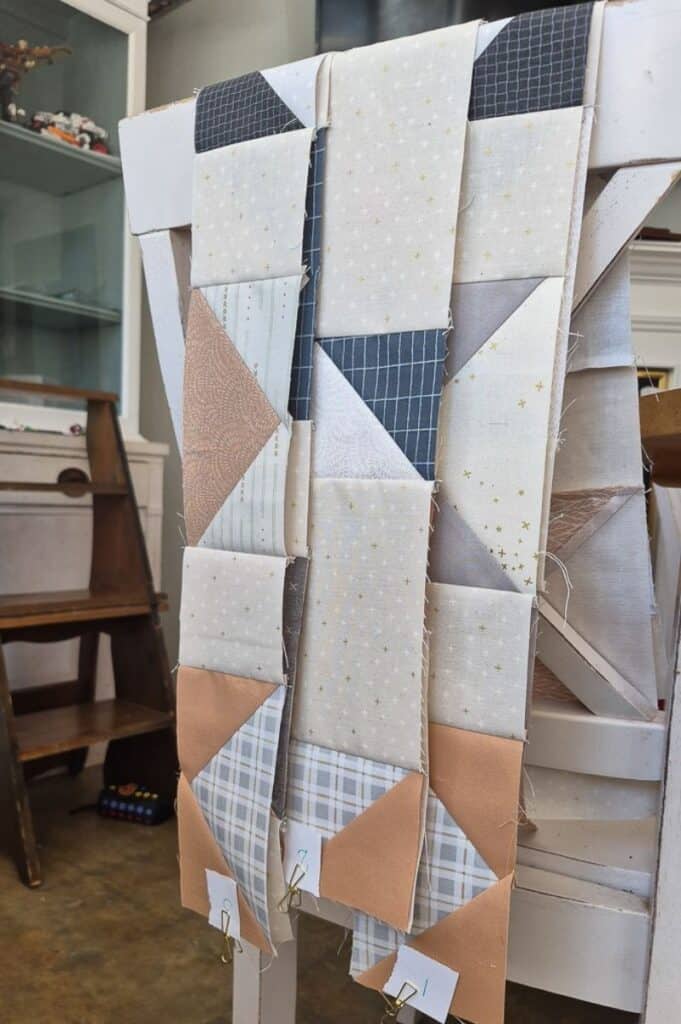
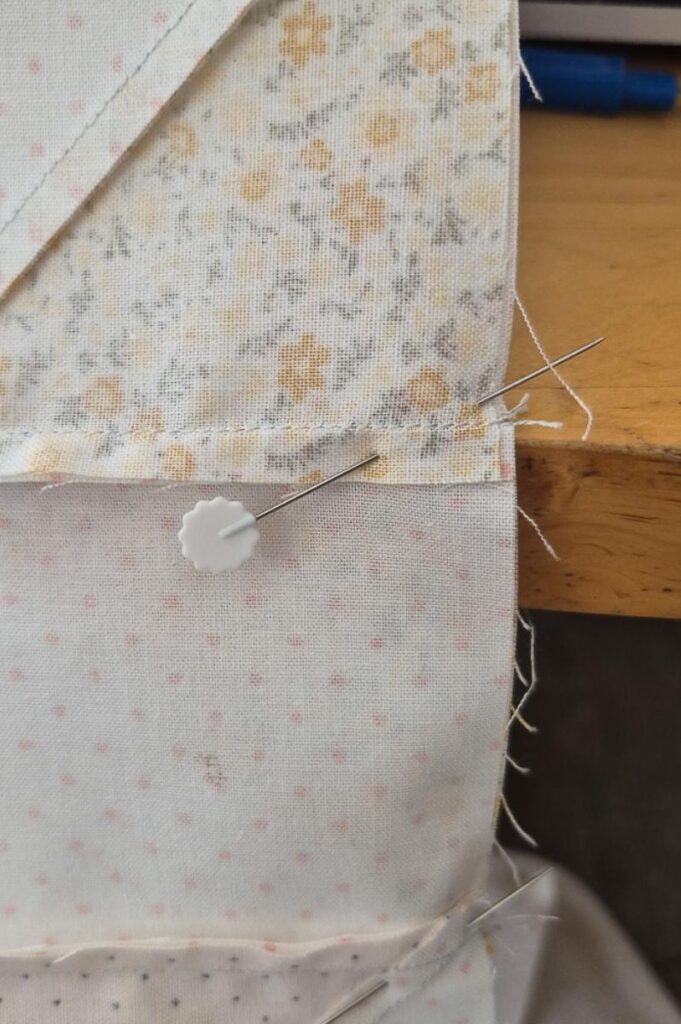
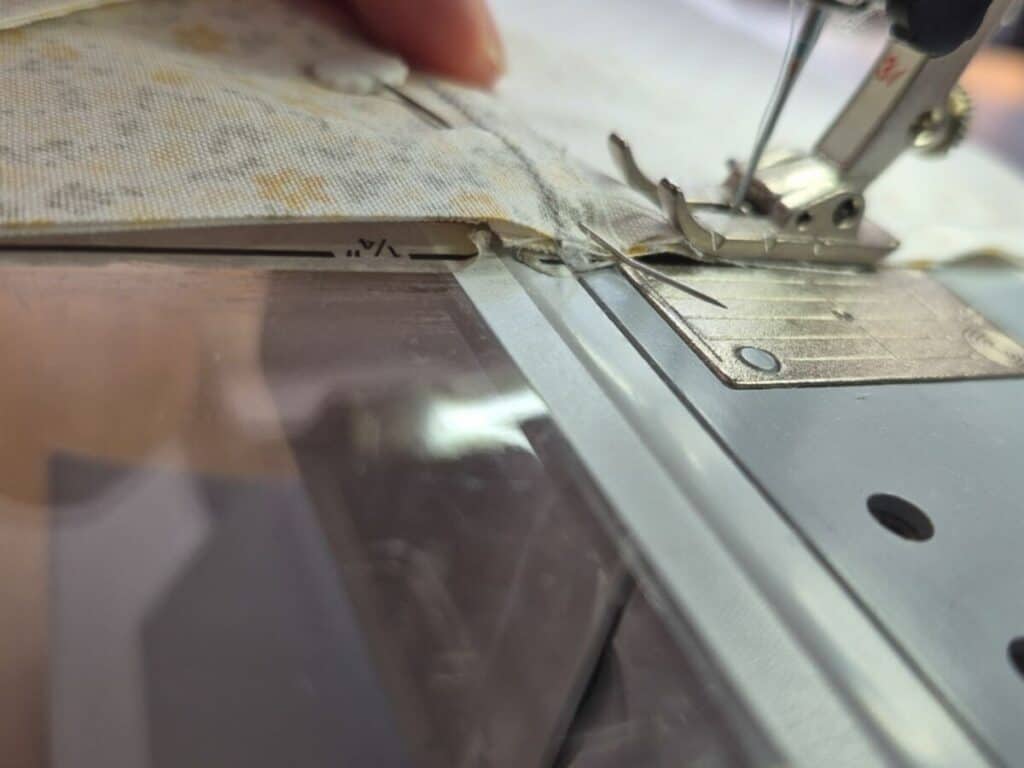
Pin seams diagonally helps to keep the points of the sky aligned along the rows.
Hint for Sewing a Large Quilt
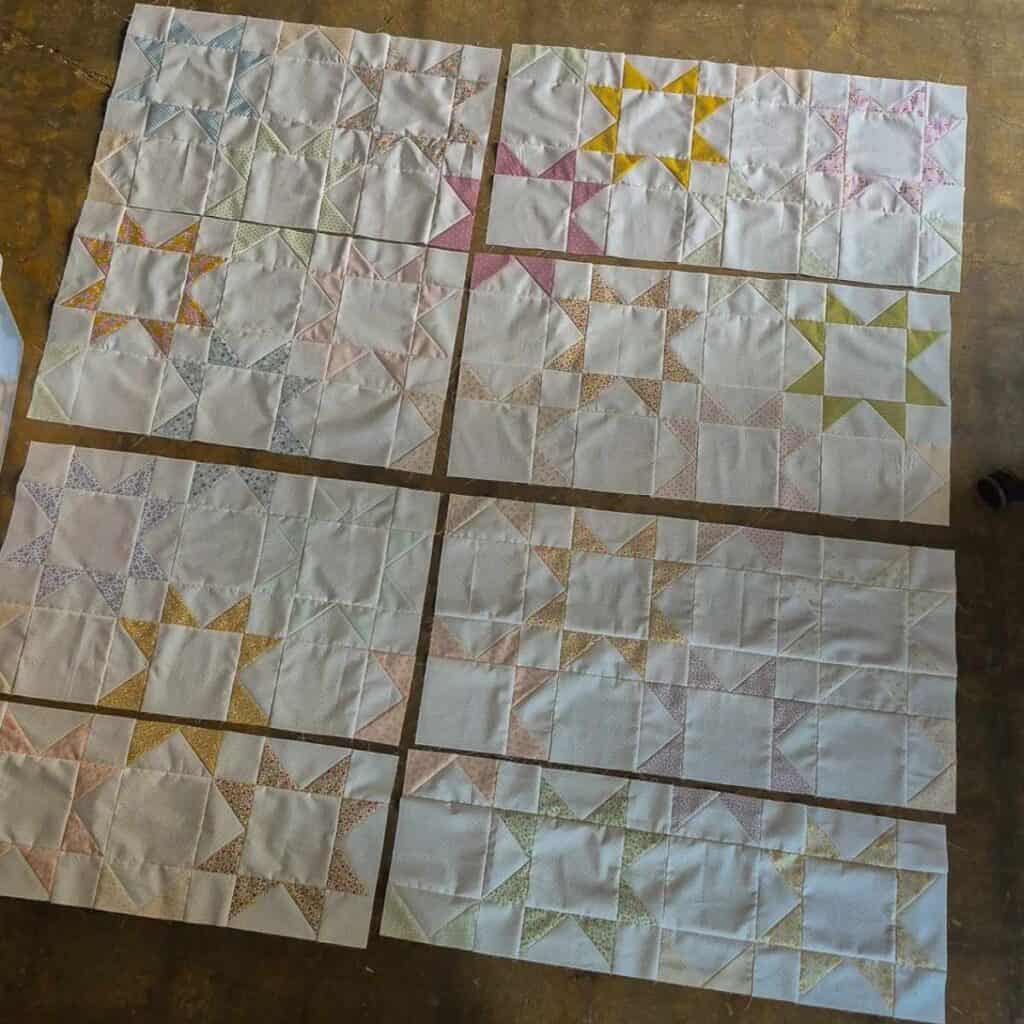
Instead of sewing one long seam after another, sew a large quilt in sections. Roughly divide the quilt into halves or thirds. Sew the half or one third rows together. Then sew those larger sections together.
Baste
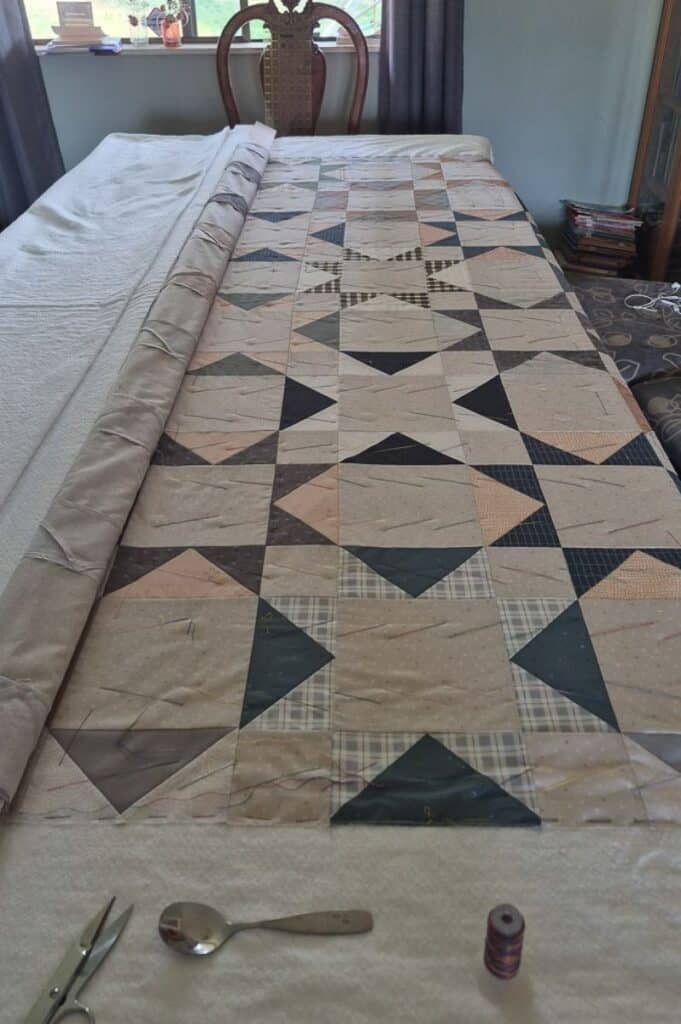
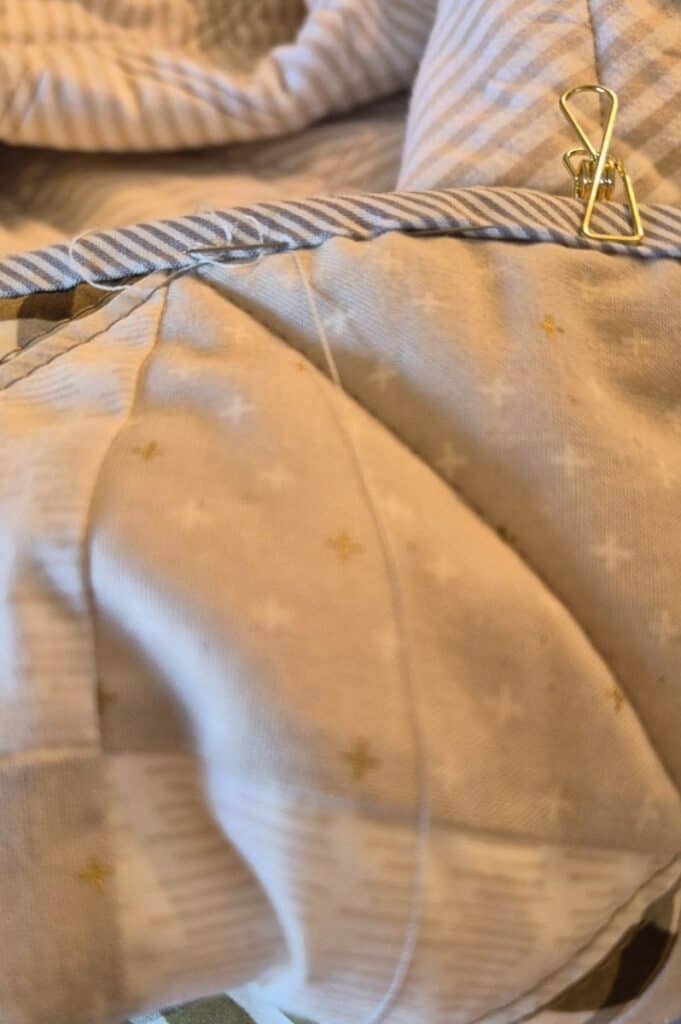
Thread basting is my absolute favorite way to baste a quilt. No spray to gum up my sewing machine needle. No pins to take out while wrangling a large quilt. Thread basting can be sewn over and over and over and still be removed.
Quilt As Desired
Quilt the Benedict quilt any way you desire. I love straight line quilting. Use a walking foot, 30wt or 40wt cotton thread with a new 90/14 top stitch needle and 3.5-4.0 mm stitch length. I tend to quilt along the seams, diagonally cross hatch, or vertically every 1 ½”. Quilt slowly! Seriously, it’s not a race. Any of these methods gives a wonderfully crinkly washable quilt. Send out for longarmming if that is your favorite quilting method. Just do not be afraid to quilt it yourself.
Bias Binding
I prefer bias binding because quilts in my house take a beating – forts, movie nights, drug into the backyard for a picnic. Bias binding is far more durable, especially at the corners and very edge of the quilt. A durable edge results from the way fabric is woven – the crisscrossed fibers on the outer fold of a bias binding. If one thread of the binding frays or snags, the affected thread only crosses from the front to the back of the quit. On a straight grain binding, that same stressed thread will fray the entire length of the quilt, possibly causing the binding to completely fray off. Devastating, I know.
I always sew the binding to the back of the quilt by machine, and then hand stitch it to the front. I love the slow finish of hand stitching when I can sit at my kids’ sports practice and stitch the binding. If you haven’t tried it, do it! It’s relaxing and just know that it may take a while, but it will not actually take forever.
If you like a quilt that is cozy, beginner friendly, stash and curated bundle friendly, the Benedict quilt is for you! Want an heirloom? Stitch it, repair it, wrap babies in it, cry under it, cherish it enough to keep it, and then one day, it will become a “GG blanket”. Heirlooms are cherished one memory at a time.
Happy quilting!